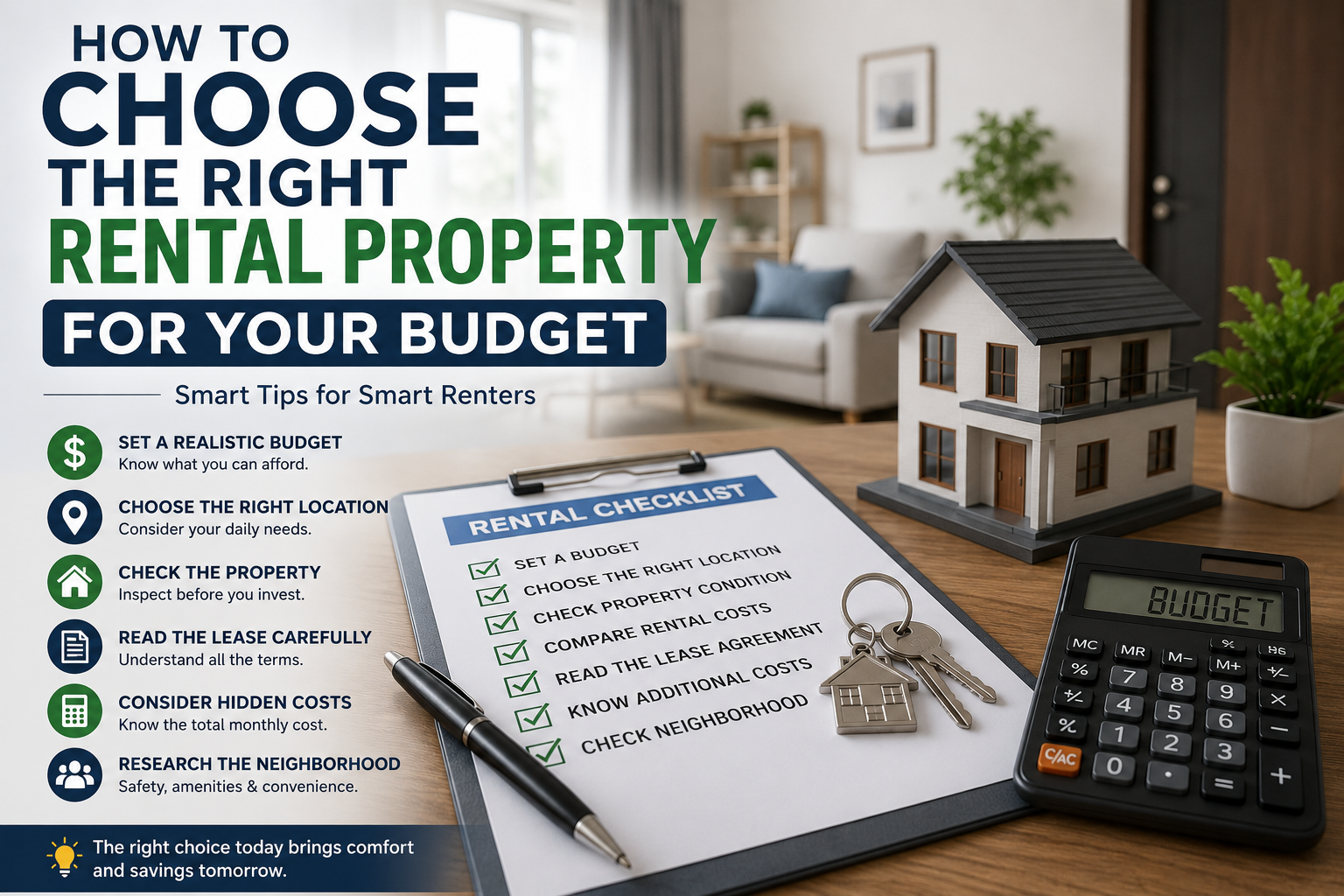
Finding the perfect rental property can be exciting, but it can also be stressful if you do not plan carefully. Many people choose a home based on appearance alone, only to discover later that the rent is too expensive or the location is not suitable. A smart renter always looks beyond the price and considers the total cost of living.
Whether you are renting your first apartment, moving to a new city, or searching for a family home, choosing a rental property that fits your budget is one of the most important financial decisions you will make. A well-planned decision can save you money, reduce stress, and provide a comfortable lifestyle.
This guide explains how to choose the right rental property for your budget using simple and practical tips.Choose the Right Rental Property for Your Budget.
Why Budget Planning Matters
Before you begin searching for rental properties, you need to understand your financial situation. Renting a house or apartment is more than paying monthly rent. There are several additional expenses that many people forget to include.
A proper budget helps you:
- Avoid financial problems
- Save money every month
- Pay rent on time
- Reduce unnecessary expenses
- Build savings for the future
Experts often recommend spending no more than 30% of your monthly income on rent. This allows you to cover other living expenses without putting pressure on your finances.
Calculate Your Monthly Budget
Start by writing down your monthly income and expenses.
Include expenses such as:
- Rent
- Electricity
- Water
- Gas
- Internet
- Transportation
- Groceries
- Insurance
- Mobile phone bills
- Emergency savings
After subtracting these expenses from your income, you will know how much rent you can comfortably afford.
Choose the Right Location
Location has a major impact on your budget. A property in the city center usually costs more than one in the suburbs. However, cheaper rent may result in higher transportation costs.
When selecting a location, consider:
- Distance from your workplace
- Nearby schools
- Public transportation
- Hospitals
- Grocery stores
- Banks
- Parks
- Shopping centers
Living closer to your daily destinations can save both time and money.
Decide What You Really Need
Many renters pay extra for features they rarely use.
Before searching, create a list of your essential requirements.
Ask yourself:
- How many bedrooms do I need?
- Do I need parking?
- Is a furnished home necessary?
- Do I need a balcony?
- Is a pet-friendly property important?
- Do I need high-speed internet?
Knowing your priorities prevents you from overspending on unnecessary features.
Compare Different Rental Properties
Never rent the first property you visit.
Spend time comparing several options based on:
- Monthly rent
- Property size
- Neighborhood
- Security
- Facilities
- Maintenance
- Transportation access
Comparing multiple properties helps you identify the best value for your money.
Check the Condition of the Property
A low rental price may hide expensive maintenance problems.
Inspect the property carefully before signing any agreement.
Look for:
- Water leaks
- Mold on walls
- Broken windows
- Damaged doors
- Faulty electrical outlets
- Plumbing issues
- Air conditioning problems
- Roof damage
Testing everything before moving in can prevent unexpected repair costs later.
Understand All Rental Costs
Many renters focus only on the monthly rent and ignore additional expenses.
Ask the landlord whether these costs are included:
- Water bills
- Electricity
- Gas
- Internet
- Parking fees
- Maintenance charges
- Security fees
- Garbage collection
Knowing the total monthly cost allows you to create a realistic budget.
Read the Lease Agreement Carefully
A lease agreement protects both the tenant and the landlord.
Before signing, read every section carefully.
Pay attention to:
- Monthly rent
- Payment due date
- Security deposit
- Lease duration
- Maintenance responsibilities
- Rules about pets
- Visitor policies
- Renewal conditions
- Early termination fees
If something is unclear, ask questions before signing.
Research the Neighborhood
A beautiful apartment is not enough if the neighborhood does not meet your needs.
Visit the area during different times of the day.
Check:
- Traffic conditions
- Street lighting
- Noise levels
- Safety
- Cleanliness
- Nearby services
Talking with local residents can also provide useful information.
Consider Future Expenses
Think about your financial future before committing to a rental property.
Ask yourself:
- Will my income remain stable?
- Can I still afford rent if prices increase?
- Will I need a larger home next year?
Choosing a property that fits both your current and future budget is a smart decision.
Check the Landlord’s Reputation
A responsible landlord can make your rental experience much better.
Try to find out:
- How quickly repairs are completed
- Whether previous tenants were satisfied
- How communication is handled
- Whether the landlord respects lease agreements
Good landlords respond quickly to maintenance requests and communicate clearly.
Avoid Common Rental Mistakes
Many renters make simple mistakes that become expensive later.
Avoid these common problems:
- Renting without inspecting the property
- Ignoring hidden costs
- Signing the lease without reading it
- Choosing a property outside your budget
- Paying deposits without receipts
- Failing to compare multiple options
Learning from these mistakes can save you money and stress.
Tips to Save Money on Rent
If you want to reduce housing costs, consider these ideas:
- Search during off-peak rental seasons.
- Negotiate the rent if possible.
- Choose a slightly smaller property.
- Share accommodation with a trusted roommate.
- Select a location with lower living costs.
- Look for rentals that include utilities.
Small savings each month can make a big difference over a year.
Benefits of Choosing the Right Rental Property
Selecting the right rental property offers many advantages.
These include:
- Better financial stability
- Comfortable living conditions
- Lower monthly expenses
- Less stress
- Convenient location
- Improved quality of life
- Greater peace of mind
A smart rental decision benefits both your finances and your daily lifestyle.
Frequently Asked Questions (FAQs)
How much of my income should go toward rent?
Most financial experts recommend spending no more than 30% of your monthly income on rent.
Should I always visit a rental property before signing?
Yes. Always inspect the property in person whenever possible to identify any issues.
Can I negotiate the monthly rent?
Yes. Some landlords are willing to negotiate, especially if the property has been vacant for some time or you are signing a long-term lease.
What is a security deposit?
A security deposit is money paid before moving in. It may be returned at the end of the lease if the property is left in good condition.
Why should I compare multiple rental properties?
Comparing different properties helps you find better prices, better locations, and more value for your budget.
Conclusion
Choosing the right rental property for your budget requires careful planning and smart decision-making. Instead of selecting a home based only on appearance, consider your monthly income, additional expenses, location, property condition, and lease terms. Comparing multiple properties and understanding all costs will help you avoid financial stress and make a confident decision.Choose the Right Rental Property for Your Budget.
The best rental property is not always the cheapest or the most luxurious. It is the one that provides comfort, safety, convenience, and affordability while fitting your financial goals. By following the tips in this guide, you can find a rental home that meets your needs without exceeding your budget and enjoy a more secure and comfortable living experience.