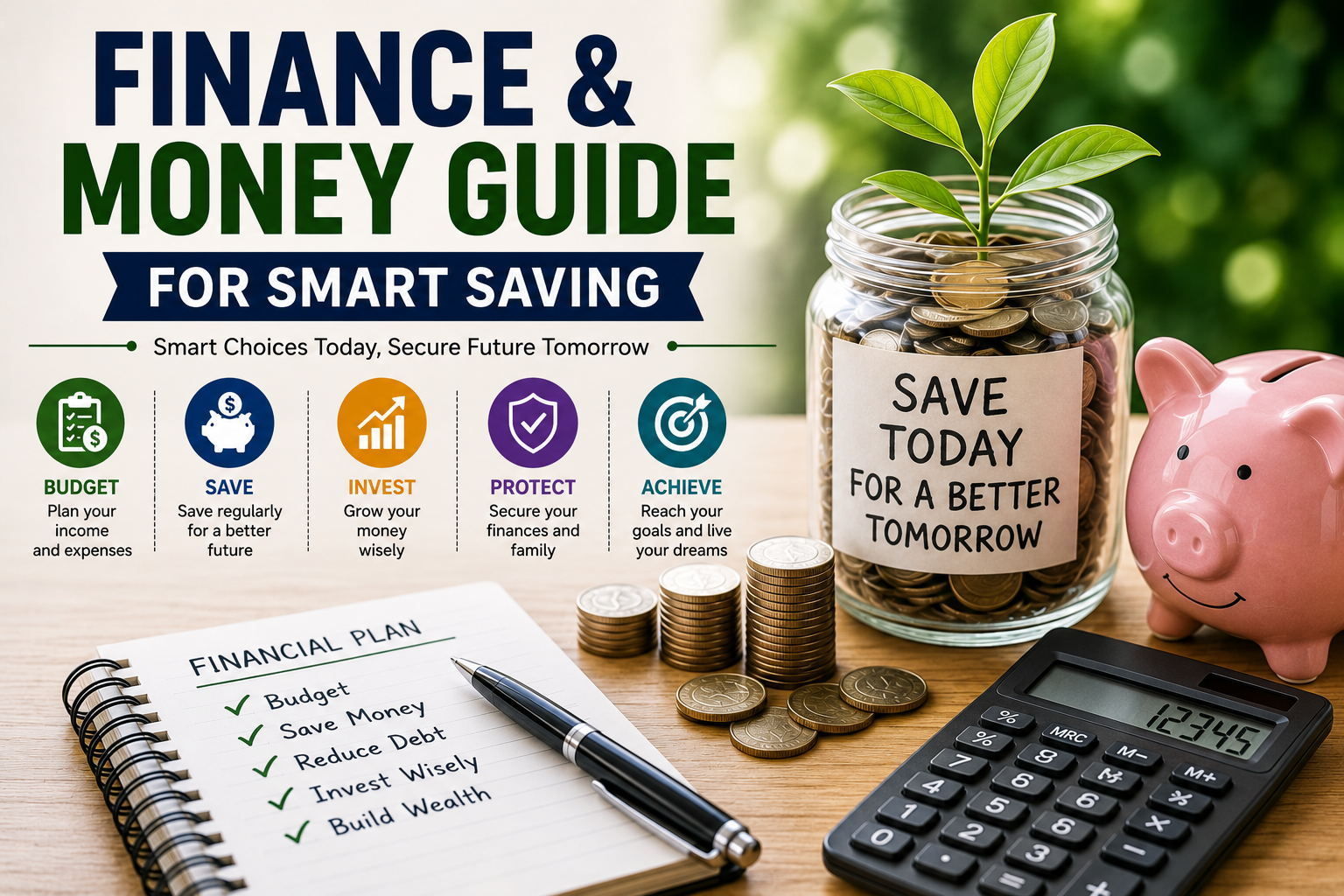
Managing money wisely is one of the most valuable life skills you can develop. No matter how much you earn, knowing how to save, spend, and plan your finances can make a big difference in your future. Smart saving is not about avoiding every expense or living without enjoyment. It is about making better financial decisions that help you achieve your goals while enjoying financial peace of mind.
Many people struggle with money because they spend without a plan. They often rely on credit cards, ignore budgeting, and fail to save for emergencies. Finance & Money Guide for Smart Saving. Over time, these habits can lead to debt and financial stress. Finance & Money Guide for Smart Saving. The good news is that smart money management is a skill anyone can learn.
This finance and money guide will show you practical strategies to save more, spend wisely, and build a secure financial future. Whether you are a student, employee, freelancer, or business owner, these tips can help you improve your financial health.
Why Smart Saving Is Important
Saving money is more than keeping cash in a bank account. It gives you financial freedom and prepares you for unexpected situations. A strong savings habit can help you handle emergencies, achieve personal goals, and reduce financial stress.
Some benefits of smart saving include:
- Better financial security
- Less dependence on loans
- Reduced stress during emergencies
- More opportunities to invest
- Greater confidence in managing money
- Freedom to achieve future goals
Saving regularly creates a strong financial foundation for your life.
Understand Your Financial Situation
Before you can improve your finances, you need to know where you stand.
Take time to calculate:
- Your monthly income
- Fixed monthly expenses
- Variable expenses
- Current savings
- Outstanding debts
Knowing your financial position helps you make better decisions and identify areas where you can save more.
Create a Realistic Budget
A budget is one of the most effective tools for managing money.
List all your income sources and monthly expenses.
Separate your expenses into two groups.
Essential Expenses
These include:
- Rent or mortgage
- Groceries
- Utility bills
- Transportation
- Healthcare
- Insurance
Optional Expenses
These include:
- Dining out
- Entertainment
- Shopping
- Streaming services
- Vacations
Review your budget every month and make adjustments whenever necessary. A good budget helps you control your spending and reach your savings goals faster.
Follow the 50/30/20 Rule
Many financial experts recommend the 50/30/20 budgeting method.
According to this rule:
- 50% of your income goes toward essential needs.
- 30% is used for personal wants.
- 20% is saved or invested.
This simple strategy makes budgeting easier and encourages consistent saving.
Save Before You Spend
Many people wait until the end of the month to save money. Unfortunately, there is often nothing left to save.
A better strategy is to save first.
As soon as you receive your income, transfer a portion directly into your savings account.
Treat your savings like a monthly bill that must always be paid.
Even saving a small amount every month will grow into significant savings over time.
Build an Emergency Fund
Unexpected expenses are part of life.
Medical bills, car repairs, home maintenance, or temporary unemployment can happen without warning.
An emergency fund protects you during these situations.
Aim to save enough money to cover three to six months of your living expenses.
If that feels difficult, start with a smaller goal and gradually increase your savings.
Reduce Unnecessary Spending
One of the easiest ways to save money is by reducing unnecessary expenses.
Simple ideas include:
- Cook meals at home.
- Carry a reusable water bottle.
- Cancel unused subscriptions.
- Buy only what you need.
- Avoid impulse shopping.
- Compare prices before purchasing.
Small daily savings become large yearly savings.
Avoid Impulse Buying
Impulse purchases are one of the biggest reasons people struggle to save money.
Before buying something, ask yourself:
- Do I really need this?
- Can I wait a few days before buying?
- Is there a cheaper alternative?
Waiting 24 hours before making non-essential purchases often helps prevent unnecessary spending.
Set Financial Goals
Saving becomes much easier when you have a clear purpose.
Examples of financial goals include:
- Buying a house
- Purchasing a car
- Starting a business
- Paying for education
- Traveling
- Building retirement savings
Write your goals down and review them regularly to stay motivated.
Track Every Expense
Many people underestimate how much they spend each month.
Track every purchase, including small daily expenses.
You can use:
- Budgeting apps
- Mobile banking tools
- Excel spreadsheets
- A simple notebook
Review your spending at the end of every month.
This helps you identify wasteful spending and improve your financial habits.
Avoid High-Interest Debt
Debt can make saving money much harder.
High-interest loans and credit card balances increase your monthly expenses.
Focus on paying off expensive debt as quickly as possible.
Avoid borrowing money for unnecessary purchases.
The less debt you have, the more money you can save and invest.
Increase Your Income
Saving money is important, but earning more money can speed up your financial progress.
Consider additional income sources such as:
- Freelancing
- Online tutoring
- Blogging
- Selling digital products
- Affiliate marketing
- Small business opportunities
Extra income should be used to increase your savings instead of increasing your spending.
Learn Basic Investing
Saving protects your money, while investing helps it grow.
Some beginner-friendly investment options include:
- Index funds
- Mutual funds
- Stocks
- Retirement accounts
- Real estate
Always research before investing and start with amounts you can afford.
Long-term investing is one of the most effective ways to build wealth.
Live Below Your Means
One of the most successful financial habits is living below your income level.
Even if your salary increases, avoid increasing your spending unnecessarily.
Instead:
- Save more.
- Invest more.
- Pay off debt faster.
- Build long-term wealth.
Living below your means creates financial stability.
Protect Your Finances
Saving money also means protecting it.
Consider having:
- Health insurance
- Life insurance
- Home insurance
- Vehicle insurance
- Emergency savings
Financial protection reduces the impact of unexpected events.
Continue Learning About Personal Finance
Financial knowledge helps you make smarter decisions.
Spend time learning about:
- Budgeting
- Investing
- Taxes
- Retirement planning
- Debt management
- Wealth building
Read books, watch educational videos, and follow trusted financial experts.
The more you learn, the better your financial decisions become.
Build Strong Financial Habits
Healthy financial habits create long-term success.
Develop habits such as:
- Saving every month
- Reviewing your budget regularly
- Paying bills on time
- Avoiding unnecessary loans
- Investing consistently
- Comparing prices before shopping
Good habits create lasting financial security.
Stay Patient and Consistent
Building financial security takes time.
Do not expect instant results.
Every dollar you save today contributes to your future success.
Stay focused on your financial goals and continue making smart decisions.
Over time, small improvements become significant financial achievements.
Conclusion
Smart saving is one of the best ways to create a secure financial future. By understanding your finances, creating a budget, reducing unnecessary spending, avoiding debt, and investing wisely, you can improve your financial health and enjoy greater peace of mind. Finance & Money Guide for Smart Saving. Remember that building wealth does not require a large income. It requires consistency, discipline, and smart financial habits.
Start with small changes today. Save regularly, spend wisely, and continue learning about personal finance. Every positive financial decision brings you one step closer to financial freedom and long-term success. With patience and determination, anyone can develop better money habits and build a stronger financial future.