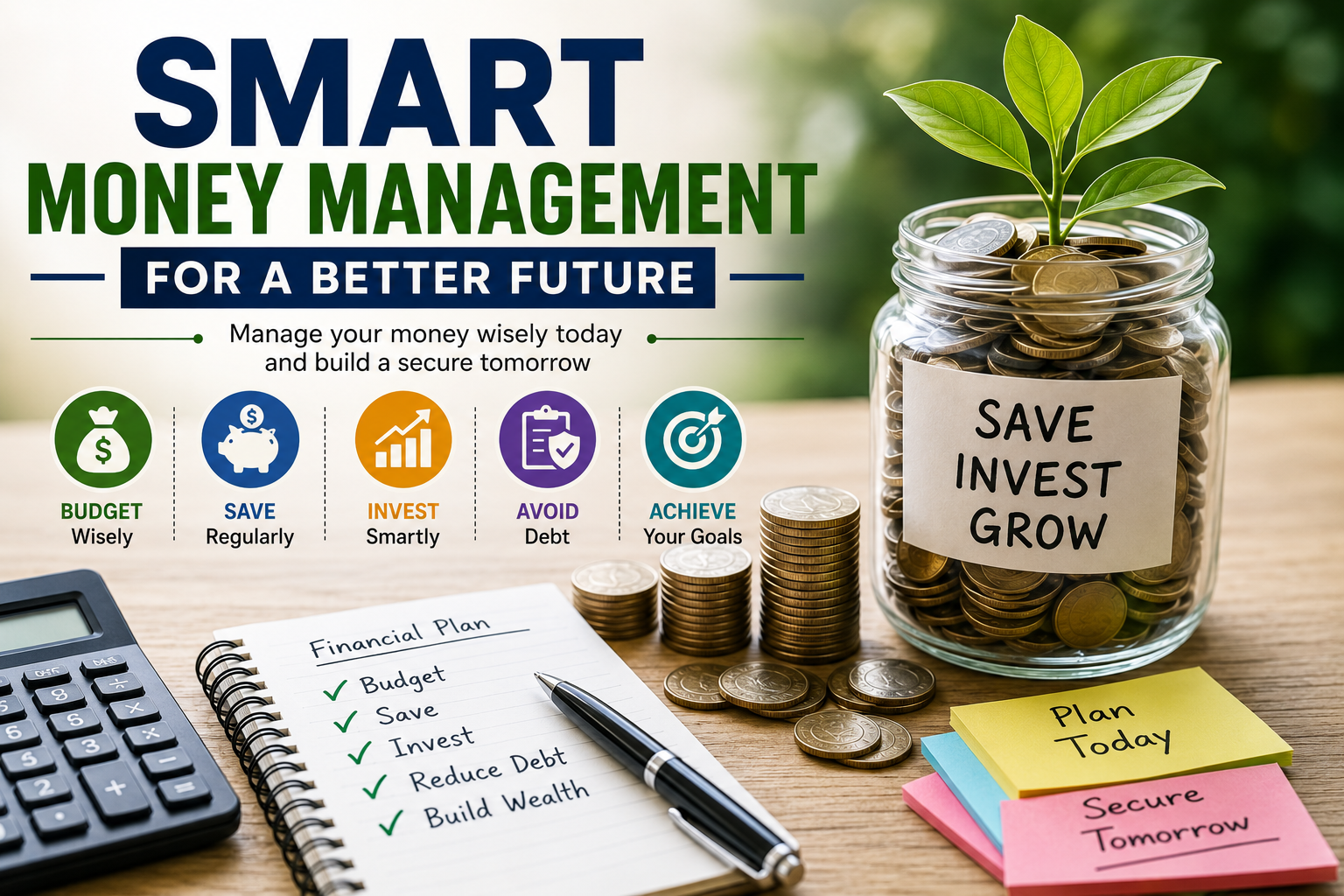
Money plays an important role in our daily lives. It helps us pay for food, housing, education, healthcare, transportation, and entertainment. However, earning money is only one part of financial success. The real key is learning how to manage it wisely. Smart money management allows you to save for the future, reduce financial stress, avoid unnecessary debt, and achieve your long-term goals.
Many people struggle with money because they spend without planning or fail to save consistently. The good news is that anyone can improve their financial situation by developing healthy money habits. You do not need to be rich to manage your finances well. Smart Money Management for a Better Future. Even small changes in your daily spending and saving habits can make a significant difference over time.
In this guide, you will learn practical money management tips that are easy to follow and can help you build a secure financial future.
What Is Smart Money Management?
Smart money management means making wise financial decisions with your income. It involves planning your spending, saving regularly, avoiding unnecessary debt, investing for the future, and protecting your finances from unexpected situations.
Good money management helps you:
- Stay within your budget.
- Save for emergencies.
- Reach financial goals.
- Reduce stress.
- Build long-term wealth.
- Improve your financial confidence.
Managing your money wisely gives you greater control over your life and future.
Know Your Monthly Income
The first step in managing money is understanding how much income you receive every month.
Your income may come from:
- Full-time employment
- Part-time work
- Freelancing
- Business profits
- Rental income
- Investments
Knowing your total monthly income helps you create a realistic financial plan and avoid spending more than you earn.
Create a Monthly Budget
A budget is one of the most effective tools for financial success.
Write down all your monthly income and expenses.
Separate your expenses into two categories:
Essential Expenses
These include:
- Rent or mortgage
- Groceries
- Electricity
- Water
- Transportation
- Healthcare
- Insurance
Non-Essential Expenses
These include:
- Dining out
- Entertainment
- Shopping
- Streaming subscriptions
- Luxury purchases
A budget helps you understand where your money goes and allows you to control unnecessary spending.
Spend Less Than You Earn
One of the golden rules of personal finance is simple:
Never spend more money than you earn.
Living beyond your income often leads to debt and financial stress.
Instead, make it a habit to spend less than your monthly earnings. The extra money can be saved or invested for future goals.
Save Money Every Month
Saving money should become a regular habit.
Instead of saving what is left after spending, save first.
As soon as you receive your salary, transfer a fixed percentage into your savings account.
Even saving a small amount every month creates financial security over time.
Consistency matters more than the amount you save.
Build an Emergency Fund
Unexpected situations can happen without warning.
Medical emergencies, job loss, car repairs, or home maintenance can become expensive.
An emergency fund protects you from financial hardship during these situations.
Most financial experts recommend saving enough money to cover at least three to six months of living expenses.
Start small and increase your savings gradually.
Set Financial Goals
Clear goals help you stay motivated.
Your financial goals may include:
- Buying a house
- Purchasing a car
- Starting a business
- Traveling
- Saving for retirement
- Paying for education
Write your goals down and divide them into short-term and long-term objectives.
Review your progress regularly.
Avoid Unnecessary Debt
Debt is not always bad, but unnecessary debt can create financial problems.
Avoid borrowing money for things you do not truly need.
If you already have debt, focus on paying off loans with the highest interest rates first.
Reducing debt allows you to save more money and improve your financial health.
Track Your Expenses
Many people do not realize how much they spend each month.
Track every expense, no matter how small.
You can use:
- A notebook
- Budgeting apps
- Excel spreadsheets
- Mobile finance apps
Reviewing your spending helps you identify areas where you can reduce costs.
Differentiate Between Needs and Wants
One of the biggest money management skills is knowing the difference between needs and wants.
Needs include:
- Food
- Housing
- Clothing
- Healthcare
- Transportation
Wants include:
- Expensive gadgets
- Luxury vacations
- Designer clothing
- Entertainment subscriptions
Before buying something, ask yourself if it is a need or simply a desire.
Making smarter purchasing decisions helps you save more money.
Shop Wisely
Smart shopping is an important part of financial management.
Follow these tips:
- Compare prices before buying.
- Wait for discounts.
- Use coupons.
- Buy quality products.
- Avoid impulse shopping.
- Prepare a shopping list.
Planning your purchases helps you avoid wasting money.
Increase Your Income
Saving is important, but increasing your income can help you reach your financial goals faster.
Some ways to earn extra income include:
- Freelancing
- Online tutoring
- Selling digital products
- Blogging
- Affiliate marketing
- Starting a small business
Extra income should be used to increase savings and investments instead of increasing spending.
Learn Basic Investing
Saving money alone may not be enough to build long-term wealth.
Investing allows your money to grow through returns.
Popular investment options include:
- Stocks
- Mutual funds
- Index funds
- Real estate
- Retirement accounts
Always research investments carefully before making decisions.
Start small if you are a beginner.
Avoid Lifestyle Inflation
As your income increases, avoid increasing your spending at the same rate.
Many people spend every salary increase on expensive items.
Instead, continue living within your budget.
Use additional income to:
- Save more
- Invest more
- Pay off debt
- Build wealth faster
This simple habit makes a huge difference over time.
Protect Your Finances
Financial protection is just as important as saving money.
Consider having:
- Health insurance
- Life insurance
- Emergency savings
- Property insurance
These financial tools protect you from unexpected losses.
Build Healthy Financial Habits
Good financial habits create lasting success.
Develop habits such as:
- Saving every month
- Paying bills on time
- Reviewing your budget
- Avoiding impulse purchases
- Investing regularly
- Tracking expenses
The more consistent your habits become, the stronger your financial future will be.
Continue Learning About Money
Financial education never stops.
Read books about personal finance.
Watch educational videos.
Listen to finance podcasts.
Learn about investing, taxes, budgeting, and retirement planning.
The more knowledge you gain, the better financial decisions you will make.
Stay Patient
Building wealth takes time.
Do not expect instant financial success.
Successful people build wealth through years of smart decisions, disciplined saving, and consistent investing.
Stay committed to your financial plan even if progress seems slow.
Small improvements every month eventually create significant financial growth.
Conclusion
Smart money management is one of the most valuable life skills you can develop. It helps you control your spending, reduce debt, save for emergencies, invest for the future, and achieve financial freedom. You do not need a high income to become financially successful. What matters most is how you manage the money you already have.
Start by creating a budget, saving regularly, avoiding unnecessary expenses, and making informed financial decisions. Every positive financial habit you build today will benefit you in the future. Remember that wealth is not created overnight. It grows through patience, discipline, and consistency. By following these smart money management tips, you can build a stronger financial future and enjoy greater peace of mind for years to come.