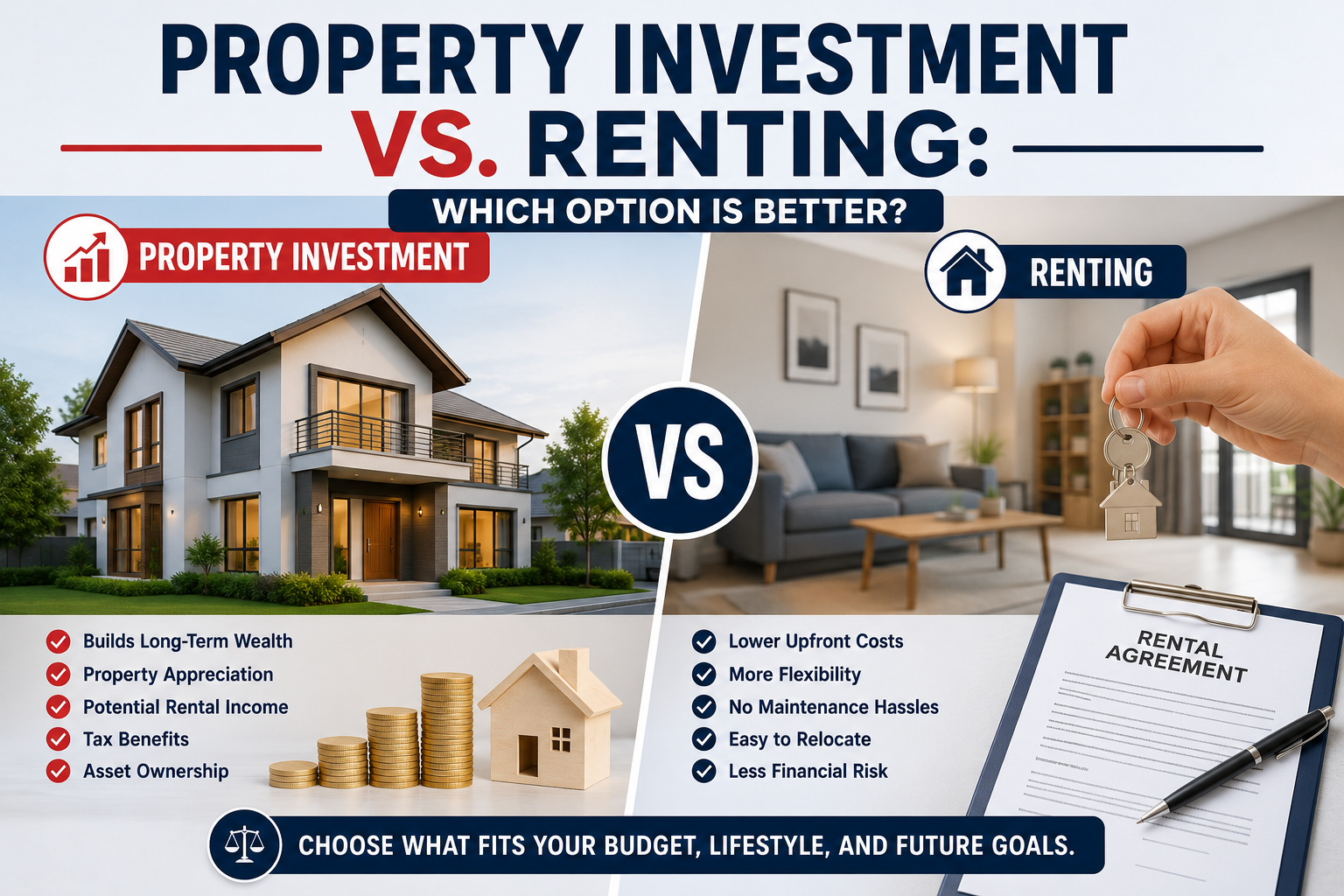
Choosing between buying a property and renting a home is one of the biggest financial decisions you can make. Both options have their own benefits and challenges. The right choice depends on your income, savings, lifestyle, career plans, and long-term goals.
Some people believe buying a home is always the best investment because it builds wealth over time. Others prefer renting because it offers flexibility and lower upfront costs. In reality, there is no single answer that works for everyone.
In this guide, we compare property investment vs. renting to help you decide which option is better for your current situation and future plans.
Understanding Property Investment
Property investment means buying a house, apartment, or other real estate with the goal of living in it, earning rental income, or increasing your wealth over time.
When you purchase a property, you become the owner. property investment vs. renting.This gives you complete control over the home, but it also comes with financial responsibilities such as maintenance, taxes, and loan payments if you finance the purchase.
Many people choose property investment because real estate often increases in value over the long term.
Understanding Renting
Renting means paying a landlord to live in a property for a specific period under a lease agreement.
Instead of owning the home, you pay monthly rent to use it. When the lease ends, you can renew it, move to another property, or choose to buy a home in the future.
Renting is popular among students, young professionals, and families who want flexibility without making a large financial commitment.
Advantages of Property Investment
Buying property offers several long-term benefits.
1. Build Long-Term Wealth
One of the biggest advantages of property investment is building equity. As you pay off your mortgage or loan, your ownership in the property increases.
If property prices rise, your investment may become more valuable over time.
2. Stable Monthly Payments
If you have a fixed-rate mortgage, your monthly payment usually stays the same, making long-term budgeting easier.
Unlike rent, which may increase every year, fixed mortgage payments provide greater financial stability.
3. Freedom to Customize
Homeowners can renovate, paint, decorate, or remodel their property without asking permission from a landlord.
You have complete control over how your home looks and functions.
4. Rental Income Opportunity
If you buy an investment property, you may earn passive income by renting it to tenants.
This additional income can help cover loan payments and increase your financial security.
5. Potential Property Appreciation
Real estate often increases in value over time.
Although prices can rise and fall in the short term, many property owners benefit from long-term appreciation.
Disadvantages of Property Investment
Owning property also has some drawbacks.
High Initial Costs
Buying a property requires a large amount of money upfront.
These costs may include:
- Down payment
- Registration fees
- Legal fees
- Property taxes
- Home inspection
- Insurance
For many people, saving this amount takes years.
Maintenance Responsibilities
Homeowners are responsible for all repairs and maintenance.
These expenses may include:
- Roof repairs
- Plumbing
- Electrical work
- Painting
- Garden maintenance
- Appliance replacement
Unexpected repairs can affect your budget.
Less Flexibility
Selling a property takes time.
If you receive a job offer in another city, moving may not be easy because your property must first be sold or rented out.
Advantages of Renting
Renting has become increasingly popular because it offers flexibility and lower financial risk.
Lower Upfront Costs
Most rental properties require only:
- Security deposit
- First month’s rent
- Basic documentation
Compared to buying a home, renting requires much less money in the beginning.
Greater Flexibility
Renters can move more easily when their lease expires.
This is ideal for:
- Students
- Young professionals
- Remote workers
- People who relocate frequently
Fewer Maintenance Costs
In most cases, the landlord is responsible for major repairs.
This means renters do not need to pay for expensive maintenance like roof repairs or plumbing replacements.
Access to Better Locations
Buying property in city centers may be too expensive.
Renting allows people to live in desirable neighborhoods at a lower monthly cost than purchasing a home in the same area.
Less Financial Risk
Property values sometimes decrease.
Renters are not affected by changes in the real estate market because they do not own the property.
Disadvantages of Renting
Although renting has many benefits, it also has limitations.
No Ownership
Monthly rent payments do not build equity.
At the end of the lease, you do not own any part of the property.
Rent Increases
Landlords may increase rent when the lease is renewed.
Higher rent can affect your monthly budget over time.
Limited Freedom
Most landlords have rules regarding:
- Painting walls
- Renovations
- Pets
- Home improvements
You may need permission before making changes.
Moving Uncertainty
A landlord may decide to sell the property or not renew your lease.
This means renters sometimes need to move unexpectedly.
Financial Comparison
When deciding between buying and renting, compare the total costs instead of focusing only on monthly payments.
Buying Costs
- Down payment
- Mortgage payments
- Property taxes
- Home insurance
- Maintenance
- Repairs
- Legal fees
Renting Costs
- Monthly rent
- Security deposit
- Utility bills
- Internet
- Parking fees
- Moving costs
Sometimes renting is cheaper in the short term, while buying becomes more affordable over many years.
Which Option Is Better for Young Professionals?
Many young professionals choose renting because it provides flexibility and lower upfront costs.
If you expect to change jobs, move to another city, or continue your education, renting may be the better option.
However, if you have a stable career, sufficient savings, and plan to stay in one place for many years, buying a property may offer better long-term financial benefits.
Which Option Is Better for Families?
Families often prefer buying because it provides stability.
Owning a home allows children to stay in the same neighborhood and school for many years.
Families also enjoy having the freedom to renovate their home according to their needs.
However, renting may still be the right choice for families who need flexibility or are saving for a future home purchase.
Common Mistakes to Avoid
Whether buying or renting, avoid these common mistakes:
- Buying a home beyond your budget.
- Renting without reading the lease agreement.
- Ignoring maintenance costs.
- Not researching the neighborhood.
- Forgetting hidden expenses.
- Making decisions based only on emotions.
- Failing to compare different properties.
Taking time to research your options can save you money and prevent future problems.
Conclusion
Property investment and renting both offer valuable benefits, but the better option depends on your personal financial situation, lifestyle, and future goals. Buying a property can help build long-term wealth and provide stability, while renting offers flexibility, lower upfront costs, and fewer maintenance responsibilities.property investment vs. renting.
Before making a decision, carefully evaluate your income, savings, career plans, and long-term commitments. Understanding the advantages and disadvantages of both options will help you make a smart and confident choice.