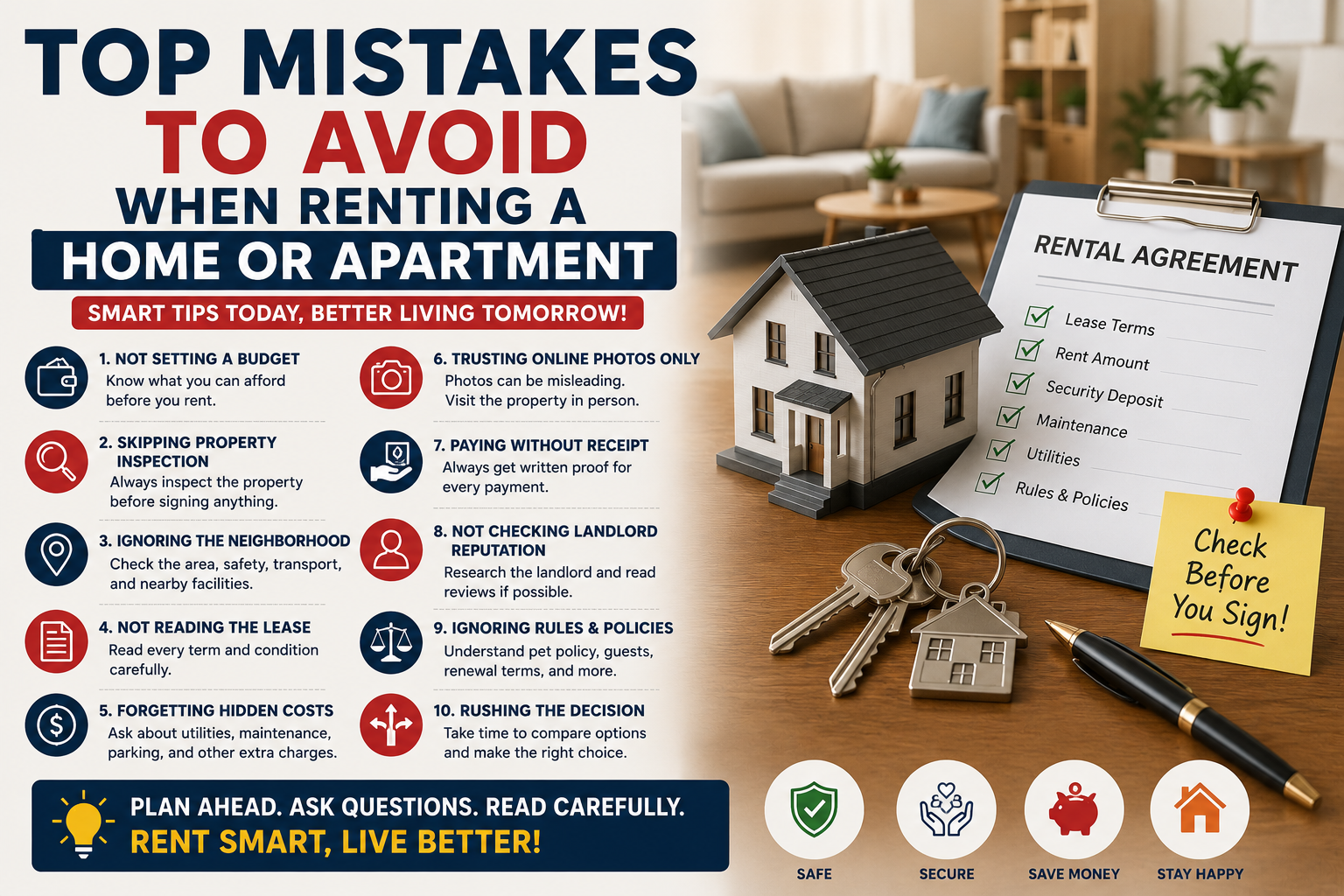
Renting a home or apartment is an important decision that affects your finances, comfort, and daily life. Whether you are renting your first apartment or moving to a new city, choosing the right property requires careful planning. Many renters make simple mistakes that lead to unexpected expenses, legal issues, or uncomfortable living conditions.Mistakes to Avoid When Renting a Home or Apartment.
The good news is that most rental problems can be avoided by doing proper research before signing a lease agreement. Understanding the common mistakes people make will help you choose a safe, affordable, and comfortable home.
In this guide, we will discuss the top mistakes to avoid when renting a home or apartment and provide practical tips to help you make a smart rental decision.
1. Not Setting a Realistic Budget
One of the biggest mistakes renters make is choosing a property they cannot comfortably afford.
Many people focus only on the monthly rent and forget about other living expenses. As a result, they struggle to pay bills every month.
Before searching for a rental property, calculate your total monthly budget.
Include expenses such as:
- Rent
- Electricity
- Water
- Gas
- Internet
- Parking fees
- Transportation
- Groceries
- Mobile bills
- Emergency savings
Financial experts generally recommend spending no more than 30% of your monthly income on rent.
2. Skipping the Property Inspection
Some renters sign a lease after viewing online photos without visiting the property.
This is a risky mistake because pictures may not show hidden problems.
Always inspect the property before making any payment.
Check for:
- Water leaks
- Mold
- Broken windows
- Damaged doors
- Plumbing issues
- Electrical problems
- Roof damage
- Pest infestations
Take photos during the inspection to keep a record of the property’s condition.
3. Ignoring the Neighborhood
A beautiful apartment is not enough if the surrounding neighborhood does not meet your needs.
Visit the area during different times of the day.
Pay attention to:
- Safety
- Noise levels
- Street lighting
- Traffic
- Public transportation
- Grocery stores
- Hospitals
- Schools
- Parks
A convenient location can save you both time and money.
4. Not Reading the Lease Agreement
Many renters sign a lease without reading all the terms and conditions.
This can create problems later if unexpected rules or charges appear.
Carefully review:
- Monthly rent
- Payment dates
- Security deposit
- Lease duration
- Maintenance responsibilities
- Pet policies
- Guest rules
- Renewal terms
- Early termination fees
Never sign a lease unless you fully understand every section.
5. Forgetting Hidden Costs
Monthly rent is only one part of your housing expenses.
Ask the landlord whether these costs are included:
- Electricity
- Water
- Gas
- Internet
- Parking
- Maintenance
- Security services
- Garbage collection
Knowing the total monthly cost helps you avoid financial surprises.
6. Trusting Online Photos Only
Online property listings often use professional photographs taken from the best angles.
Some images may be old or edited.
Whenever possible:
- Visit the property.
- Request a live video tour.
- Ask for recent photos.
- Verify the actual condition.
Seeing the property in person gives you a much better understanding of its condition.
7. Paying Money Without Proper Documentation
Never pay rent or a security deposit without receiving written proof.
Always keep copies of:
- Rent receipts
- Security deposit receipts
- Lease agreements
- Email conversations
- Payment confirmations
These documents protect you if disagreements arise later.
8. Choosing the Cheapest Property
Saving money is important, but the cheapest rental is not always the best choice.
Low-priced properties may have:
- Poor maintenance
- Unsafe neighborhoods
- Limited facilities
- Frequent repair issues
Instead of choosing the lowest price, compare value, location, and condition.
9. Not Asking Questions
Many renters hesitate to ask landlords important questions.
Before signing the lease, ask about:
- Utility bills
- Maintenance requests
- Internet service
- Parking availability
- Pet policies
- Visitor rules
- Lease renewal
- Security measures
A responsible landlord will answer your questions honestly.
10. Failing to Compare Multiple Properties
One common mistake is renting the first apartment you see.
Spend time comparing different rental options.
Compare:
- Rental price
- Property size
- Neighborhood
- Facilities
- Transportation
- Safety
- Maintenance
Comparing several properties helps you make a better decision.
11. Ignoring Future Needs
Think beyond your current situation.
Ask yourself:
- Will my family grow?
- Will I change jobs?
- Do I need more parking?
- Will I work from home?
Choosing a property that meets your future needs can save you from moving again soon.
12. Not Checking the Landlord’s Reputation
A good landlord makes renting much easier.
Try to learn about the landlord before signing.
You can:
- Read online reviews.
- Ask current or former tenants.
- Observe how quickly they respond to questions.
- Check whether maintenance issues are handled properly.
Professional landlords usually communicate clearly and respect tenants.
Tips for a Better Renting Experience
Following a few simple tips can make renting easier and more enjoyable.
Always:
- Set a realistic budget.
- Read the lease carefully.
- Inspect the property.
- Compare different rentals.
- Research the neighborhood.
- Keep written records.
- Ask questions before signing.
These habits can help you avoid many common rental problems.
Benefits of Avoiding These Mistakes
When you avoid common renting mistakes, you enjoy several benefits.
These include:
- Better financial planning
- Lower monthly expenses
- Safer living conditions
- Fewer maintenance problems
- Better communication with landlords
- Reduced stress
- Greater peace of mind
Making informed decisions today can save you significant money and frustration in the future.
Frequently Asked Questions (FAQs)
Should I inspect a rental property before signing the lease?
Yes. Always inspect the property carefully to identify any damage or maintenance issues before signing.
Why is reading the lease agreement important?
The lease explains your rights, responsibilities, payment terms, and important rules that both you and the landlord must follow.
What hidden costs should I ask about?
Ask about utility bills, maintenance fees, parking charges, internet costs, security fees, and any additional monthly expenses.
Is the cheapest rental property always the best option?
No. A very cheap property may have poor maintenance, safety concerns, or expensive hidden costs.
How can I avoid rental scams?
Never pay money without verifying the property, meeting the landlord or agent, signing a written lease, and receiving official payment receipts.
Conclusion
Renting a home or apartment is a major financial commitment, and avoiding common mistakes can save you money, time, and stress. By setting a realistic budget, inspecting the property, researching the neighborhood, reading the lease carefully, and understanding all costs, you can make a confident and informed decision.
Remember that the best rental property is not simply the cheapest one—it is the one that offers safety, comfort, convenience, and value for your money. Take your time, compare different options, ask questions, and keep all agreements in writing. Mistakes to Avoid When Renting a Home or Apartment. Following these simple steps will help you enjoy a smooth and successful renting experience while avoiding costly mistakes.