Home repairs are a normal part of owning or renting a house. From fixing a leaking faucet to repairing electrical wiring, every home needs maintenance from time to time. When something breaks, many homeowners ask the same question: Should I repair it myself or hire a professional?
Both home repair and professional repair have advantages and disadvantages. Some jobs are simple enough to complete on your own, while others require the skills, tools, and experience of a trained expert. Choosing the right option can save you money, protect your property, and ensure your family’s safety.
In this guide, we compare home repair vs. professional repair to help you decide which option is better for different situations.
Understanding DIY Home Repair
DIY (Do-It-Yourself) home repair means fixing or maintaining your home without hiring a professional.
Many homeowners enjoy DIY projects because they can save money and learn new skills. Simple repairs often require only basic tools and a little patience.home repair vs. professional repair.
Common DIY repairs include:
- Painting walls
- Tightening loose screws
- Replacing cabinet handles
- Cleaning gutters
- Fixing small leaks
- Replacing light bulbs
- Assembling furniture
These tasks usually do not require advanced technical knowledge.
Understanding Professional Repair
Professional repair involves hiring trained technicians or contractors to complete repair work.
Professionals have experience, specialized tools, and technical knowledge that allow them to handle complex repairs safely and efficiently.
Common professional services include:
- Electrical repairs
- Plumbing repairs
- Roof replacement
- HVAC maintenance
- Structural repairs
- Appliance repair
- Flooring installation
Professional repair is often the safest option for major home problems.
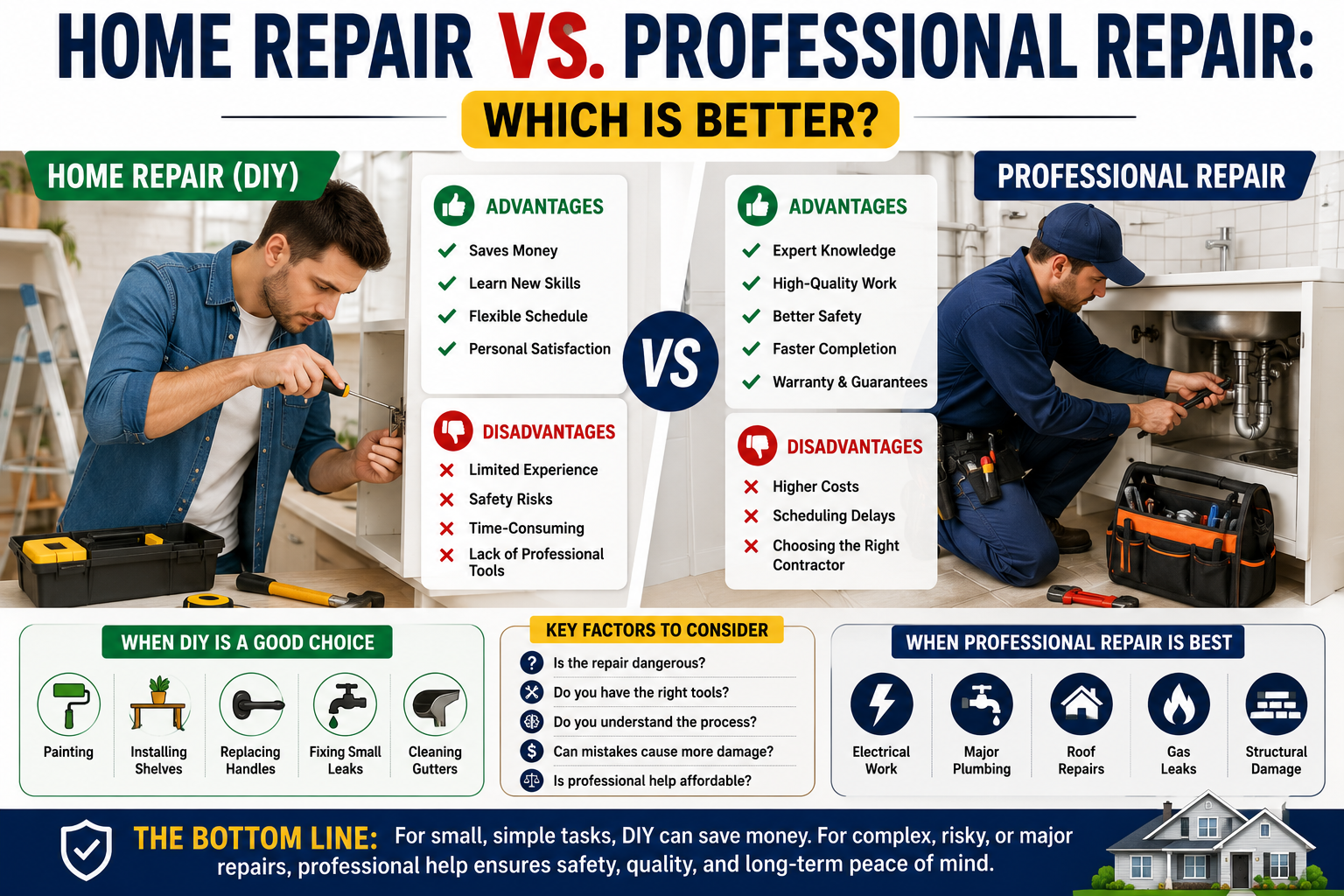
Advantages of DIY Home Repair
Many homeowners prefer DIY repairs because of several benefits.
1. Saves Money
One of the biggest advantages is reducing labor costs.
You only pay for materials and basic tools, making small repairs much more affordable.
2. Learn New Skills
DIY projects help you gain valuable home maintenance experience.
Over time, you become more confident in handling basic repairs.
3. Flexible Schedule
You can complete repairs whenever it is convenient without waiting for a contractor.
4. Personal Satisfaction
Many homeowners enjoy the feeling of completing repairs successfully.
Finishing a project yourself can be rewarding.
Disadvantages of DIY Home Repair
DIY repairs are not always the best choice.
Limited Experience
Without proper knowledge, mistakes can happen.
Incorrect repairs may cause more damage and increase repair costs.
Safety Risks
Electrical work, roofing, and gas repairs can be dangerous.
Improper handling may result in injuries or accidents.
Time-Consuming
Learning new repair techniques takes time.
Simple projects can become frustrating if unexpected problems arise.
Lack of Professional Tools
Many repairs require specialized equipment that most homeowners do not own.
Buying expensive tools for one project may not be cost-effective.
Advantages of Professional Repair
Hiring professionals provides many important benefits.
Expert Knowledge
Professionals understand how to diagnose and solve problems quickly.
Their experience helps prevent costly mistakes.
High-Quality Work
Professional repairs usually last longer because they follow industry standards.
Quality workmanship protects your home over time.
Better Safety
Experts know how to handle electrical systems, plumbing, roofing, and heavy equipment safely.
This greatly reduces the risk of accidents.
Faster Completion
Professionals complete repairs much faster than most homeowners because they have the right tools and experience.
Warranty and Guarantees
Many repair companies offer warranties on their work.
If a problem returns, they may fix it at no additional cost.
Disadvantages of Professional Repair
Professional services also have some disadvantages.
Higher Costs
Labor charges increase the total repair cost.
Large projects can become expensive.
Scheduling Delays
Popular contractors may not be available immediately.
You may need to wait several days before repairs begin.
Choosing the Right Contractor
Not every repair company provides the same quality of service.
Research is necessary before hiring someone.
When DIY Is the Better Choice
DIY repairs are suitable for simple and low-risk tasks.
Examples include:
- Painting rooms
- Installing shelves
- Replacing door handles
- Fixing loose cabinet hinges
- Cleaning drains
- Basic garden maintenance
These jobs usually require minimal technical knowledge.
When Professional Repair Is the Better Choice
Some repairs should always be handled by qualified professionals.
These include:
- Electrical wiring
- Gas leaks
- Roof repairs
- Foundation damage
- Major plumbing work
- HVAC installation
- Structural repairs
Attempting these repairs without proper training may create serious safety hazards.
Cost Comparison
Many people assume DIY is always cheaper.
While DIY saves labor costs, mistakes can become expensive.
For example:
A homeowner may incorrectly repair a leaking pipe.
The leak continues unnoticed and causes water damage throughout the home.
Hiring a professional from the beginning could have prevented these additional expenses.
Always compare the total cost, including materials, tools, and possible repair mistakes.
Tips for Choosing the Best Option
Before deciding, ask yourself these questions:
- Is the repair dangerous?
- Do I have the necessary tools?
- Do I understand the repair process?
- Will incorrect work create larger problems?
- Is professional help affordable?
Answering these questions honestly will help you choose wisely.
Common Mistakes Homeowners Make
Avoid these common repair mistakes:
- Ignoring small problems
- Using poor-quality materials
- Watching only one online tutorial
- Attempting dangerous repairs
- Hiring unqualified contractors
- Skipping safety equipment
Small mistakes today can become expensive repairs tomorrow.
Benefits of Making the Right Choice
Choosing the appropriate repair method offers many advantages.
These include:
- Better home safety
- Lower long-term repair costs
- Improved property value
- Higher-quality results
- Greater peace of mind
- Longer-lasting repairs
Whether you choose DIY or professional repair, making informed decisions protects both your home and your budget.
Frequently Asked Questions (FAQs)
Is DIY home repair always cheaper?
Not always. DIY reduces labor costs, but mistakes can make repairs much more expensive.
Which repairs should always be done by professionals?
Electrical work, gas repairs, roofing, structural damage, and major plumbing jobs should always be completed by qualified professionals.
Can DIY repairs increase home value?
Yes. Well-completed cosmetic improvements such as painting or landscaping may improve your home’s appearance and value.
How do I choose a reliable repair professional?
Compare customer reviews, verify licenses, request written estimates, and choose experienced contractors with a good reputation.
Should I repair or replace damaged items?
If repair costs are close to replacement costs, replacing the item may be the better long-term investment.
Conclusion
Choosing between DIY home repair and professional repair depends on the type of work, your experience, and your budget. Simple maintenance tasks such as painting, installing shelves, or replacing fixtures are often suitable for DIY projects. However, complex repairs involving electricity, plumbing, roofing, gas, or structural damage should always be handled by trained professionals.
Making the right decision protects your home, saves money over time, and reduces safety risks. Instead of focusing only on the immediate cost, consider the quality, durability, and long-term value of the repair. By understanding when to do it yourself and when to hire an expert, you can keep your home safe, functional, and well maintained for years to come.home repair vs. professional repair.
A Complete Guide to Finding Affordable Rental Properties Near You
LinkedIn Jobs