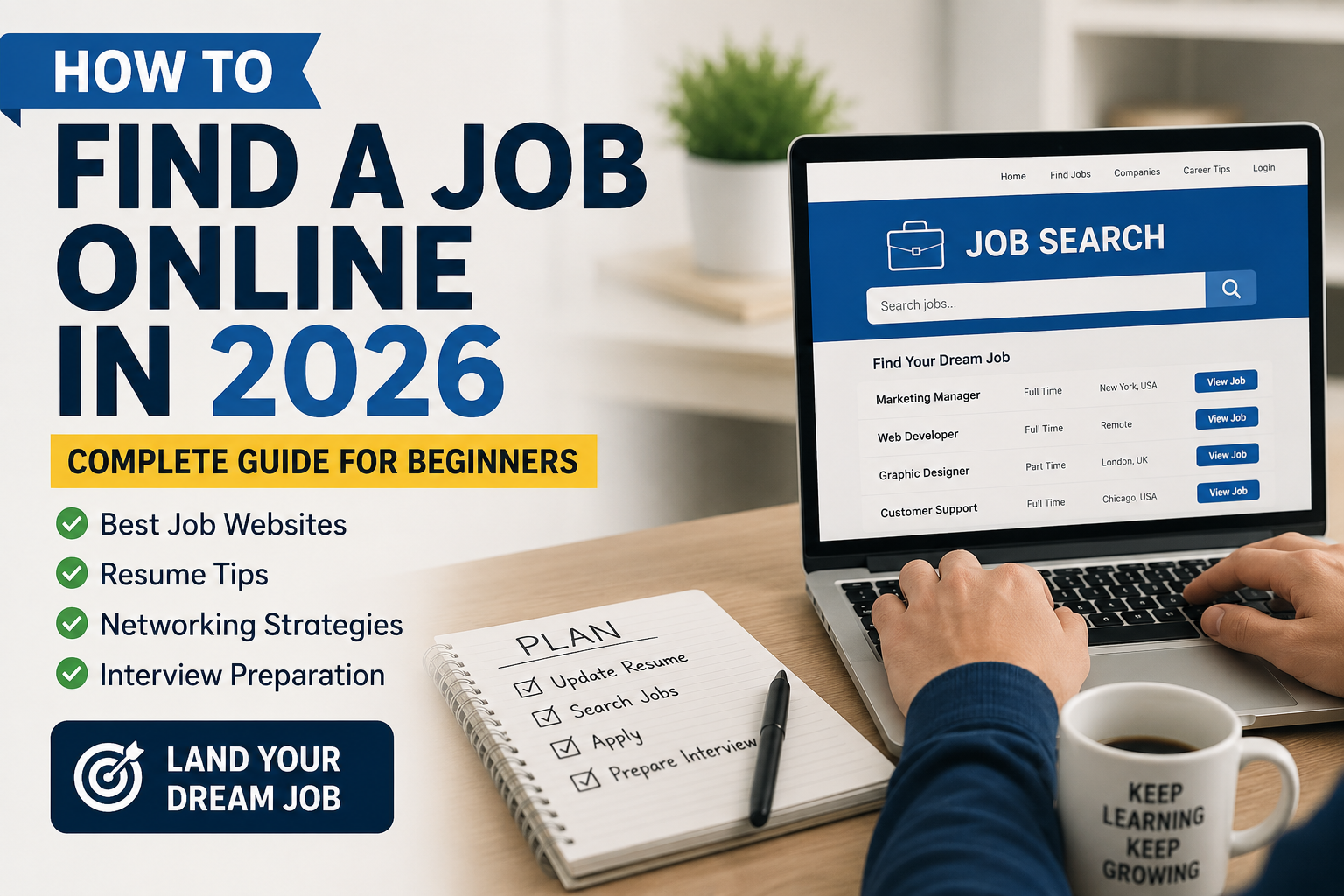
Finding a job has become easier than ever thanks to the internet. In 2026, thousands of companies hire employees through online job portals, career websites, and social media platforms. Whether you are a fresh graduate, a student, or an experienced professional, learning how to search for jobs online can help you find better opportunities faster.
However, simply applying to hundreds of jobs is not enough. Employers receive many applications every day, so you need the right strategy to stand out from the competition.
This guide will teach you how to find a job online in 2026, improve your resume, prepare for interviews, and increase your chances of getting hired.
Why Online Job Searching Is Better
Most companies now use online recruitment systems. Instead of collecting paper resumes, they advertise vacancies on websites where applicants can apply within minutes.
Some benefits of online job searching include:
- Access thousands of job opportunities.
- Apply from anywhere.
- Save time and money.
- Get alerts for new vacancies.
- Compare salaries and company reviews.
- Apply to local, remote, and international jobs.
Online job searching gives candidates more flexibility and helps employers find qualified people quickly.
Identify Your Skills Before Applying
Before applying for any position, spend time understanding your skills.
Ask yourself:
- What am I good at?
- Which industries interest me?
- Do I want a full-time, part-time, or remote job?
- What salary do I expect?
- What experience do I already have?
Knowing your strengths helps you apply for jobs that match your abilities instead of wasting time on unsuitable positions.
Create a Professional Resume
Your resume is the first impression employers have of you.
A professional resume should include:
Personal Information
Include your:
- Full name
- Phone number
- Professional email address
- City and country
- LinkedIn profile (optional)
Professional Summary
Write a short paragraph explaining who you are, your experience, and your career goals.
Example:
“I am a motivated customer service professional with excellent communication skills and two years of experience helping clients. I enjoy solving problems and working in fast-paced environments.”
Work Experience
List your jobs starting with the newest.
Include:
- Company name
- Position
- Employment dates
- Main responsibilities
- Achievements
Education
Mention:
- Degree
- Institution
- Graduation year
Skills
Include both technical and soft skills.
Examples:
- Microsoft Office
- Data Entry
- Digital Marketing
- Customer Service
- Communication
- Problem Solving
- Teamwork
- Time Management
Write a Strong Cover Letter
Many employers still ask for a cover letter.
A good cover letter explains:
- Why you want the job
- Why you are the right candidate
- What value you can bring to the company
Keep it short, professional, and customized for each application.
Use Trusted Job Websites
Choose reliable job portals instead of random websites.
Look for platforms that verify employers and regularly update listings.
Trusted websites often allow you to:
- Upload your resume
- Save job searches
- Receive email alerts
- Track your applications
- Apply with one click
Creating profiles on multiple job platforms increases your visibility.
Optimize Your Online Profile
Many recruiters search candidates online before scheduling interviews.
Make sure your online presence looks professional.
Tips include:
- Use a professional profile picture.
- Update your work experience.
- Highlight your achievements.
- Add relevant skills.
- Request recommendations from colleagues.
A complete profile can attract recruiters even if you are not actively applying.
Search Using the Right Keywords
Searching with the right keywords helps you find better opportunities.
Examples:
- Digital Marketing Executive
- Graphic Designer
- Software Developer
- Customer Support
- Data Entry Operator
- Content Writer
- Sales Representative
- Remote Accountant
Using filters such as location, salary, and experience level saves time.
Apply for Jobs That Match Your Skills
Do not apply for every job you see.
Instead:
- Read the job description carefully.
- Check the required qualifications.
- Match your experience with employer requirements.
- Customize your resume.
Quality applications usually perform better than sending hundreds of identical resumes.
Learn In-Demand Skills
Employers in 2026 value candidates who continue learning.
Popular skills include:
- Artificial Intelligence tools
- Digital Marketing
- Search Engine Optimization (SEO)
- Graphic Design
- Video Editing
- Programming
- Data Analysis
- Cloud Computing
- Cybersecurity
- Communication Skills
Free and paid online courses can help improve your qualifications.
Prepare for Online Interviews
Many companies now conduct interviews through video calls.
Before your interview:
- Test your internet connection.
- Choose a quiet location.
- Dress professionally.
- Keep your resume nearby.
- Practice common interview questions.
- Maintain eye contact with the camera.
Confidence and preparation leave a positive impression.
Build Your Professional Network
Networking helps you discover hidden job opportunities.
Ways to build your network include:
- Attend career events.
- Join professional groups.
- Connect with recruiters.
- Participate in webinars.
- Stay active on professional networking platforms.
Many jobs are filled through referrals before being publicly advertised.
Beware of Job Scams
Online scams continue to increase every year.
Warning signs include:
- Asking for money before hiring.
- Guaranteed jobs without interviews.
- Unrealistically high salaries.
- Poorly written emails.
- Requests for personal banking information.
Always research the employer before accepting any offer.
Track Every Application
Create a spreadsheet with:
- Company name
- Position
- Date applied
- Interview date
- Application status
- Follow-up date
Tracking applications keeps your job search organized.
Follow Up Professionally
If you haven’t heard back after one or two weeks, send a polite follow-up email.
Keep it brief and professional.
Example:
“Dear Hiring Manager,
I hope you are doing well. I wanted to follow up regarding my application for the Marketing Executive position. remain interested in the opportunity and would appreciate any update regarding the hiring process.
Thank you for your time.”
Improve Your Interview Skills
Practice answering common questions such as:
- Tell me about yourself.
- Why should we hire you?
- What are your strengths?
- What are your weaknesses?
- Where do you see yourself in five years?
Practice with friends or record yourself to improve confidence.
Continue Learning While Searching
Do not stop improving while waiting for interviews.
You can:
- Complete online certifications.
- Learn new software.
- Improve English communication.
- Build a portfolio.
- Volunteer for projects.
- Start freelancing.
Employers appreciate candidates who continue learning.
Stay Positive
Finding the right job takes time.
Some applications may be rejected, but every interview provides valuable experience.
Successful job seekers:
- Keep improving.
- Stay consistent.
- Learn from mistakes.
- Never stop applying.
Persistence often leads to better opportunities.
Common Mistakes to Avoid
Avoid these mistakes during your job search:
- Sending the same resume everywhere.
- Applying without reading job descriptions.
- Ignoring spelling mistakes.
- Using an unprofessional email address.
- Missing interview appointments.
- Lying about qualifications.
- Not following up.
- Giving up too early.
Future of Online Jobs
The online job market continues to grow rapidly.
Remote work, freelance projects, AI-powered recruitment, and hybrid work models are becoming more common. Employers increasingly value adaptability, digital skills, and continuous learning.
Candidates who stay updated with industry trends and improve their skills regularly will have more career opportunities in the coming years.
Conclusion
Learning how to find a job online in 2026 requires more than simply submitting applications. A strong resume, a professional online profile, relevant skills, careful job searching, and interview preparation all play an important role in getting hired.
Stay organized, keep learning, avoid job scams, and apply strategically instead of randomly. With patience, consistency, and the right approach, you can increase your chances of finding a rewarding career that matches your goals Find a Job Online in 2026.
Frequently Asked Questions
1. What is the best way to find a job online in 2026?
Use trusted job websites, create a professional resume, optimize your online profile, and apply only for jobs that match your skills.
2. How many jobs should I apply for each day?
Applying for 5–10 well-matched jobs daily is generally more effective than sending dozens of generic applications.
3. Do I need a cover letter?
Yes. A personalized cover letter can help you stand out and show employers why you are interested in the role.
4. How can I avoid online job scams?
Never pay money for a job, verify the employer, research the company, and be cautious of offers that seem too good to be true.
5. Which skills are most valuable in 2026?
Digital Marketing, AI tools, SEO, data analysis, programming, communication, video editing, cybersecurity, and cloud computing are among the most in-demand skills.